


Your car’s suspension system ensures a smooth and safe driving experience. It is responsible for absorbing shocks, maintaining tire contact with the road, and providing stability during turns and braking. However, weather and road conditions significantly impact how well your suspension performs over time. These components can demote the system if neglected, influencing overall car performance, passenger comfort, and safety. This blog shows how weather and road conditions influence your suspension and why early car suspension services are necessary.

Knowing the Suspension System
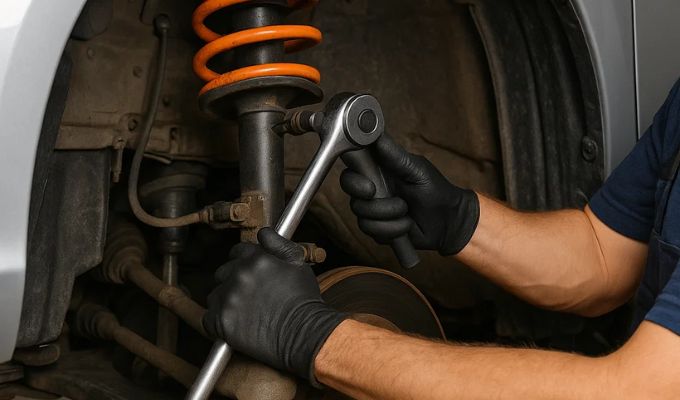
To venture into the influence of external factors, it is essential to know what comprises the suspension system. The main components are:
Springs (coil or leaf)
Shock absorbers
Struts
Control arms
Ball joints
Anti-roll bars
All these components collaborate to control the forces from uneven roads and changing loads. When any of these components are damaged or worn, your vehicle’s handling, ride quality, and safety may be affected.
Effect of Weather on Suspension
1. Cold Weather and Freezing Temperature
Severe cold weather can be harsh on the suspension of your car. Rubber parts like bushings and seals will harden in sub-zero temperatures, causing decreased flexibility. This can lead to:
More noise and vibrations
Breakdown of rubber parts
Reduced response from shock absorbers due to increased hydraulic fluid thickness
Additionally, cold temperatures can make snow and ice stick underneath the vehicle. When the accumulated material melts and then freezes, it will exert pressure on suspension parts, resulting in misalignment or stress cracks over time.
2. Hot and Humid Conditions
Increased temperatures can also hurt your suspension. The rubber components can be softened, resulting in:
Increased wear and tear
Decreased damping ability of shock absorbers due to weakened hydraulic fluid
Expansion of metal components, which may lead to loosening of joints
In tropical climates, the chance of rust is more prevalent, particularly on the undercarriage. Rust can exhaust metal parts like control arms, springs, and bolts, ultimately affecting the suspension configuration.
3. Rainy Seasons
Heavy rains increase potholes and road erosion. Road wetness also causes hydroplaning, which stresses suspension components as they work harder to maintain tire contact with the road. Rain removes road particles that may serve as small barriers, leaving deeper and sharper holes that immediately damage your suspension system.
Impact of Road Conditions on Suspension
1. Potholes and Uneven Roads
Deteriorating roads with potholes, cracks, and uneven surfaces are at the top of the list of suspension damage culprits. Riding over them regularly can result in:
Bent or shattered control arms
Stripped or damaged springs
Imbalanced wheels
Leaking struts or shocks
One harsh impact from a deep pothole alone can destabilize your suspension’s geometry and handling. Gradually, this will impair your steering and braking.
2. Off-Road Driving
Off-road conditions, while exciting, are challenging on your suspension system. Rocks, gravel, and uneven ground make your suspension do more work. If your vehicle is not specifically off-road-capable with special suspension, driving in these situations for extended periods can lead to the following:
Sagging springs
Leaking shock absorbers
Loosened mounts and joints
3. Speed Bumps and Curbs
Though intended for safety, speed bumps and curbs can become hazardous if driven over improperly or at excessive speeds. Cumulative impacts create unnecessary stress on the suspension, leading to noisy joints, ride-quality issues, or structural failure.
Warning Signs Your Suspension is Compromised
Early detection can prevent severe damage. Specific symptoms of your suspension being in decline include:
Bouncing excessively after driving over a bump
Nose diving on braking
Uneven tire wear
Pulling to one side of the vehicle
Knocking or creaking sounds when wheels are in motion
If problems exist, it is time to get car suspension services from a reliable mechanic.
Need for Regular Car Suspension Services
Paying no attention to your suspension system until it fails is costly and hazardous. Regular car suspension services can ensure that:
Worn-out components are replaced early.
Lubrication is kept up to date.
Rust and corrosion are minimized.
Adequate alignment and balance are maintained.
These services prolong the life of your suspension and improve gas mileage, road handling, and general vehicle safety.
Most automotive professionals usually recommend an annual or 20,000–30,000-kilometer inspection, depending on conditions and use.
Tips for Safeguarding Your Suspension from Weather and Road Conditions
Slow down when crossing speed bumps and rough roads.
Steer clear of potholes whenever possible.
Wash the undercarriage regularly, particularly after use in mud or salt.
Employ seasonal and terrain-specific tires.
Park in a garage or shaded area to prevent overexposure to extreme temperatures.
Conclusion
Your suspension system is an unsung hero of your vehicle, quietly providing a smooth and safe ride. It is subject to constant stress from erratic weather patterns and rough road surfaces. Knowing how these outside factors influence your suspension and maintaining regular car suspension maintenance is the secret to keeping your car’s performance and protecting your passengers. Don’t let your ride become rough—have your suspension inspected today and drive confidently, regardless of weather or road conditions.

