


Luxury cars are built for performance, comfort, and technology. The suspension systems of luxury cars are intended to deliver a smooth and responsive ride regardless of road conditions. However, irrespective of how advanced the technology is, suspension problems can arise over time due to wear and tear, driving conditions, or weather conditions. This blog will discover luxury cars’ most common suspension problems and how to repair them correctly. Being a luxury car owner, if you know these problems and when to seek car suspension repair, you can avoid expensive repairs and gain a better driving experience.
1. Worn Shock Absorbers and Struts
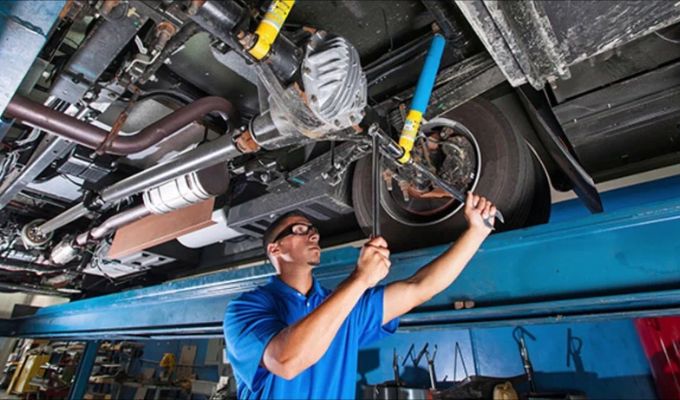
Luxury cars rely heavily on high-performance struts and shock absorbers for a smooth ride and improved handling. These components deteriorate or leak fluid as time passes, reducing their capacity to absorb bumps on the road.
Symptoms:
- Extensive bouncing after hitting a bump
- Nose-dipping when braking
- Uneven tire wear
- Fluid leakage on the suspension
Solutions:
The best option is to replace worn-out shocks or struts with OEM or high-quality aftermarket parts. Periodic maintenance inspection covered under your car suspension maintenance will help detect early symptoms of aging before they become safety hazards.
2. Air Suspension Failure
All the major luxury cars employ active ride comfort with air suspension systems in most cases. Air springs and compressors are used rather than coil springs in such systems to deliver ride height adjustment and damping.
Symptoms:
- Sags to one side
- Odd noises on starting the car
- Warning lights for suspension
- Sits too low or too high
Solution:
Suspension systems are sensitive and must only be touched by experts. The issue can be brought about by a faulty air spring, airline leaks, or an incorrect compressor. Prompt car suspension repairs are necessary not to cause more damage and maintain the ride’s comfort.
3. Noisy Suspension Components
Unusual noises such as clunking, squeaking, or knocking when driving over bumps are common indications of suspension problems. The noises are due to worn bushings, ball joints, or control arms—the most essential to control wheel motion.
Symptoms:
- Clunking sound upon driving over bumps
- Looseness of the steering
- Unstable ride quality
Solution:
Diagnosis of the particular part causing the noise requires close inspection. The solution is usually weakening or worn-out suspension bushings, ball joints, or control arms. Regular car suspension checkups can identify such faults in time to prevent a costly overhaul.
4. Uneven Tire Wear
Suspension problems will usually exhibit themselves in an unusual pattern of tire wear. If your tires are wearing faster on one side or the tread has irregular bald spots, this can indicate suspension misalignment or component damage.
Symptoms:
- The inner or outer tire tread wears faster than the rest.
- The vehicle drifts to one side.
- Handling or steering instability
Solution:
Wheel alignment and suspension checks are needed to correct the issue. Worn-out parts must be replaced, and alignment readjusted following the manufacturer’s specifications. Regular tire rotation and car suspension maintenance will prolong tire life and vehicle performance.
5. Leaking Suspension Fluids
Hydraulic suspension systems, employed by some luxury vehicles, rely on fluids to manage ride height and damping. Hydraulic suspension system leaks may cause the suspension to fail or become inefficient.
Symptoms:
- Fluid dripping underneath the vehicle.
- Sagging suspension
- Harsh or rough ride
Solution:
A hydraulic system leak should be repaired immediately. There might be the need to replace seals, hoses, or hydraulic shock absorbers. Delaying could lead to system failure. Let such delicate systems be left to skilled technicians who offer professional car suspension repair and maintenance.
6. Suspension Warning Lights
New luxury cars come with advanced diagnostic systems that monitor the suspension system constantly. You will get warning lights or alerts on your dashboard if something goes wrong.
Symptoms:
- Warning lights related to suspension
- Ride height issues
- The vehicle enters limp or low suspension mode.
Solution:
A diagnostic scan has to be performed to decode the suspension error codes. Depending on the code, the repair can be sensors’ recalibration, electronic control unit (ECU) replacement, or mechanical repair. Trained car suspension service providers are the only ones who can interpret these diagnostics correctly and perform the needed repairs.
7. Sagging or Drooping Front/Rear End
If the front or back of your vehicle appears lower than usual, it could be a sign of malfunction in the spring or airbag of suspension. This adversely affects your driving experience and damages other suspension parts with uneven load distribution.
Symptoms:
- Lower one end of the vehicle
- Not stable when driving at high speeds
- Dragging or bottoming out
Solution:
Check for damaged coil springs, flat airbags, or worn shocks. They need to be replaced for the vehicle’s safety, and routine car suspension maintenance can address these issues before they become major.
Conclusion
Luxury vehicles are built to give a ride like no other, but their high-performance suspension system requires a professional touch and timely servicing. Several problems can occur if not addressed on time, from outworn shocks to faulty air suspensions. Identifying the warning signs and selecting expert car suspension services can come a long way in extending the life of your suspension system and offering the silky-smooth, secure ride luxury cars are renowned for.
If your vehicle is showing sagging, uneven wear on the tires, or suspension light alerts, don’t delay. Fixing these problems promptly will keep your luxury car running and feeling like it should. Leave repairs to trained technicians and expert shops at all times, and take initiative with routine maintenance.

